Concrete Demolition and Removal in Lancaster, CA
Getting the old slab out, off the property, and replaced with something that will not do the same thing again. Tear-out, haul-away and replacement across the Antelope Valley.
Most of what we do starts with something coming out. A driveway that has broken into pieces, a patio that has lifted at one corner, a slab that was poured over ground nobody prepared. Demolition is not the glamorous half of the job but it is usually the half that decides whether the new pour lasts.
The important part is that the concrete actually leaves. Broken slab stacked at the side of the house waiting on a second trip is a common way for this work to go wrong, and it is why haul away is part of the job instead of an add on.
The other important part is looking at what comes out. A slab tells you why it failed. Whether the base underneath is loose, whether water has been running where it should not, whether the joints were ever cut properly. That is free information and it changes how the replacement gets built.
What's included
What removal actually covers
Breaking it out
Cut and broken into liftable pieces, worked around whatever has to stay: fences, walls, irrigation, gas lines, the neighbor's paint.
Hauling it away
Off the property, not stacked in the side yard. Concrete is heavy and awkward and it does not belong sitting on your lawn for two weeks.
Reading the base
Once the slab is up we can see the ground that failed under it. That is the most useful thing we learn all job.
Re-grading and compaction
Subgrade cut to depth and compacted properly, because putting new concrete on the base that killed the old slab is a way of scheduling the same phone call.
Protecting what stays
Adjacent flatwork saw cut cleanly at the line rather than cracked back into work you wanted to keep.
The replacement pour
Forms, reinforcement, pour, finish and joints, so one crew owns the whole thing and there is nobody to point at.
Recent work
Jobs like these

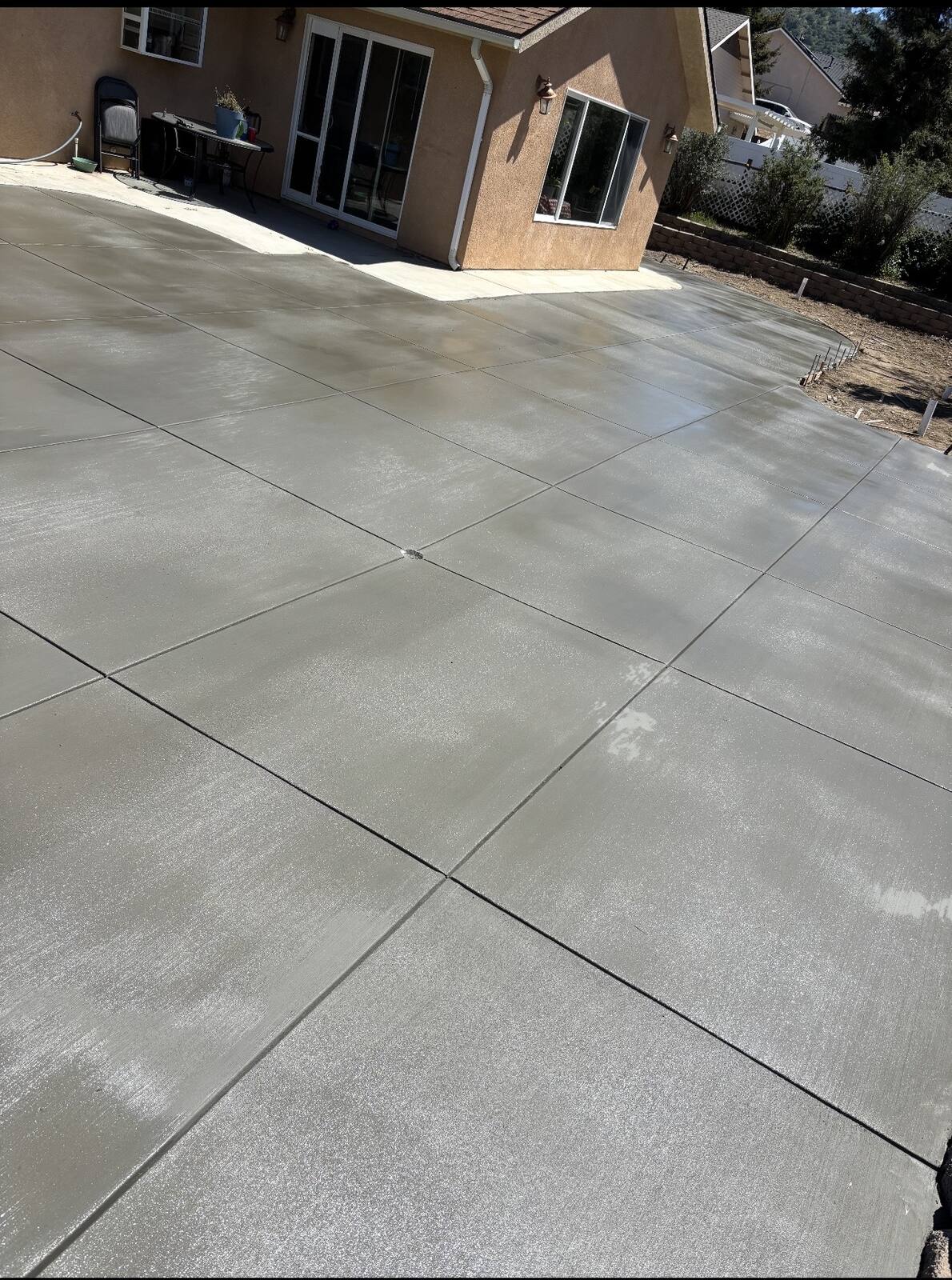
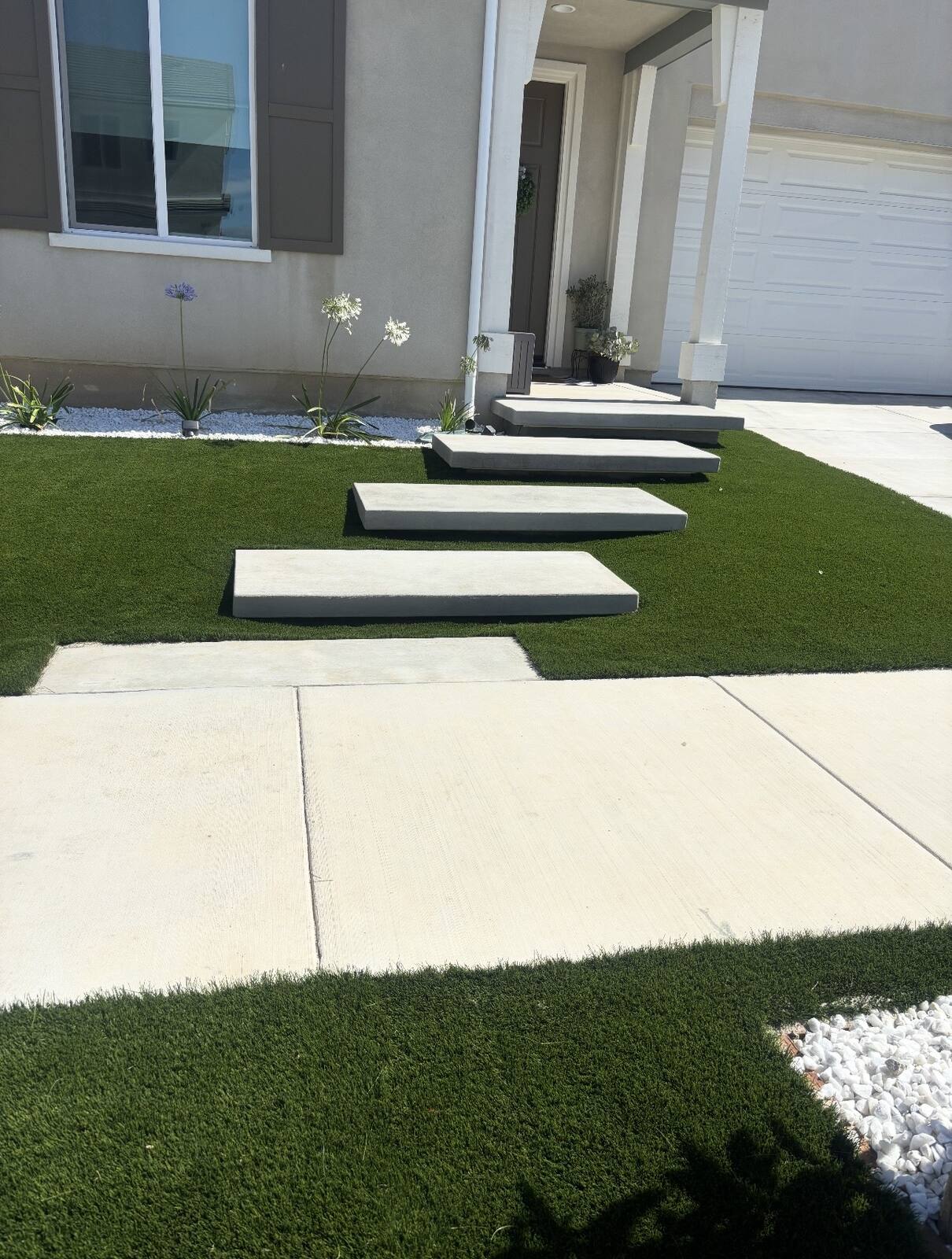
How it goes
How a tear-out runs
Look before quoting
What is failing, how much of it, and what is next to it. Access matters more than square footage on a tight lot.
Break and remove
Cut, broken out and loaded. Usually the loudest day and often the fastest one.
Fix the ground
The part that gets skipped when a price looks too good. Re-grade, compact, and correct whatever was sending water the wrong way.
Pour it back
New slab, proper joint layout, cured properly, and clear instructions on when it can take weight.
Out here specifically
Why the old slab failed, and how to not repeat it
When a slab fails in the Antelope Valley it is rarely the concrete's fault. Los Angeles County's own environmental report for this area states that none of the soils in the study area are classified as expansive under the Uniform Building Code table, with one exception east toward Rosamond Dry Lake. Our ground is sandy loam formed from granitic alluvium. That means the clay heave story you read on national websites mostly does not apply here, which is useful, because it points at the things that actually do.
In practice, failure here is base preparation, joints, or water. A subgrade that was never compacted settles unevenly and the slab bridges the void until it cannot. Joints spaced too far apart, cut too shallow or cut a day late let the slab crack wherever it wants. And water running under a slab, usually from a downspout or irrigation aimed at the wrong place, will undermine it slowly and invisibly for years.
So when the old concrete comes up, we look. Loose or uneven base tells you compaction. A crack pattern with no joint anywhere near it tells you joint layout. A washed out channel under one edge tells you drainage, and that one needs fixing above ground or the new slab will go the same way. It costs nothing to look and it is the difference between a replacement and a repeat.
One thing that genuinely does not apply here, and it is worth saying because so much durability advice is built around it: deicing salt. It is not a factor in this valley. If someone is selling you a specification on the basis of salt exposure, they are quoting a climate that is not ours.
Questions we get
Do you haul the old concrete away?
Yes, and it goes on the same job instead of a later trip. Broken concrete left stacked in a side yard is one of the more common complaints people have about this work, so removal is included rather than treated as an extra.
Can you take out just part of my driveway?
Often yes. If the failure is confined to one section and the rest is sound, we can saw cut cleanly at a joint line and replace only that area. Whether it is worth doing depends on why the failed section failed, because a base problem rarely stops at a line.
Should I repair or replace?
Repair makes sense when the slab is structurally sound and the problem is cosmetic or confined. Replace when the base has moved, when cracks are spreading, or when sections sit at different heights. Patching a slab that is still moving buys a season, and you pay twice.
How messy is demolition?
Loud and dusty for a day, and then done. We cut instead of just break where it matters, keep the work contained, and clean the site down at the end. Access is the real variable, since a narrow side yard takes longer than an open driveway.
Will you damage my sprinklers or the fence?
We walk the site first specifically to find irrigation, gas lines, fence posts and anything else in the way. Tell us where lines run if you know, because that is faster and safer than us finding out.
How soon can you pour after removing the old slab?
Usually within the same stretch of work, once the base is cut, graded and compacted. The gap between removal and pour is base preparation, and it is not a step worth rushing to save a day.
Where we do this
Demolition and Removal across the Antelope Valley
Tear-out and replacement across every town we cover.
Get an estimate
Tell us what you are looking at and we will get back to you with a real number, not a range.
Submission received
Thanks for the details. Manuel will call or text you back about it. If you would rather not wait, reach him directly at (661) 917-9145.