Concrete Patios and Hardscape in Lancaster, CA
The backyard side of the work. Concrete and paver patios, walkways, fire pits and outdoor counters, built across Lancaster and the Antelope Valley.
Most houses out here were handed over with a bare yard and a small slab off the back door, and that is where this work usually starts. A patio that is big enough to actually use, a path that goes where people already walk, somewhere to sit that is not a folding chair on gravel.
We build these in concrete, in pavers, or in both, and the right answer depends on the space rather than on what we would rather pour. A large open patio is usually concrete. A curved path, a raised seating area or anything that might need lifting later is usually pavers.
The pieces that make a yard feel finished are rarely the biggest ones. A fire pit with proper seating around it, a counter you can actually put food on, a walkway that connects the side gate to the patio instead of a worn line through the dirt.
What's included
What we build out back
Concrete patios
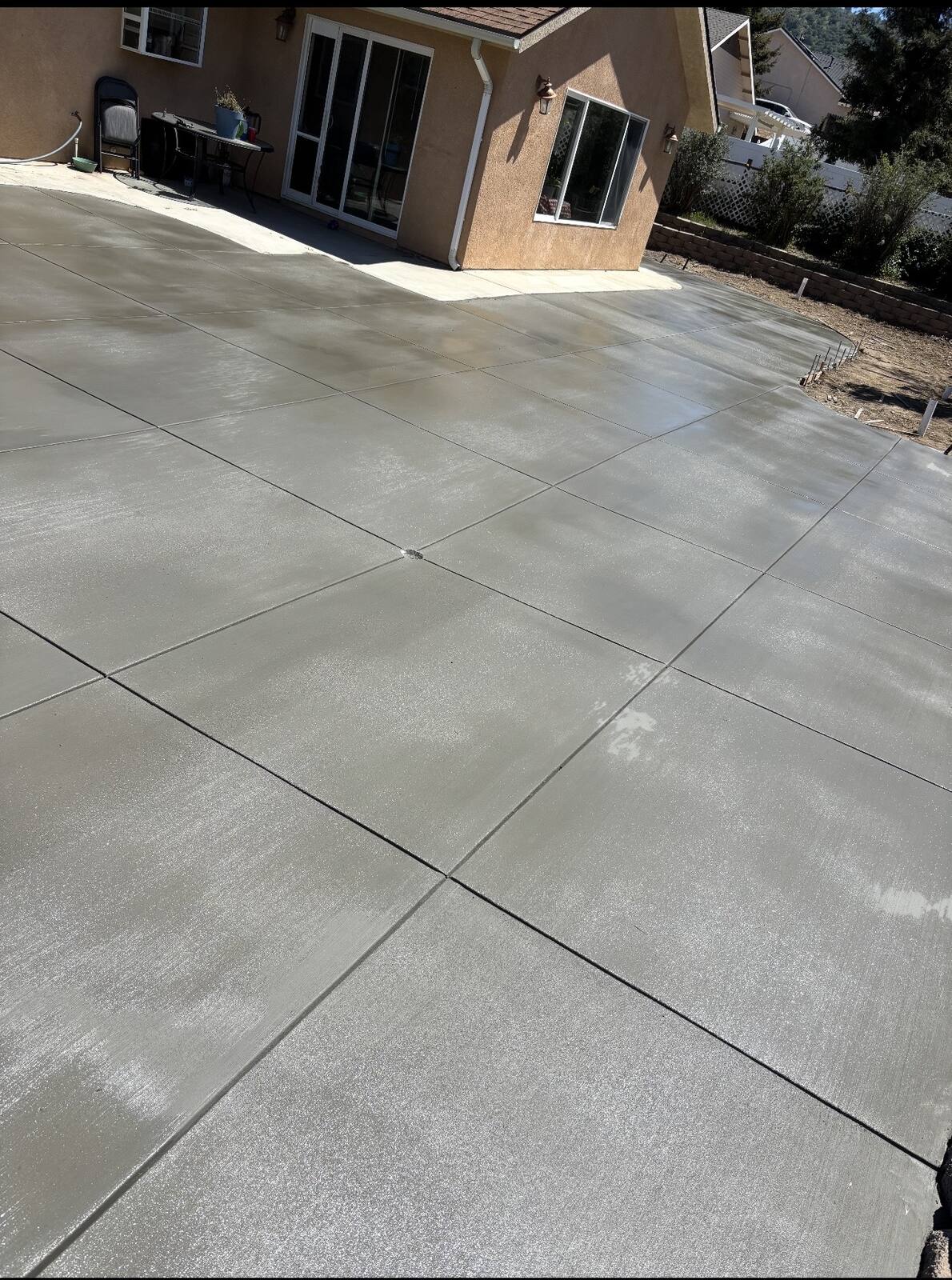
Broom finish or stamped, sized to how you actually use the space instead of to whatever the builder left you.
Paver patios
Individual units on a compacted base with proper edge restraint, so anything that settles later can be lifted and reset.
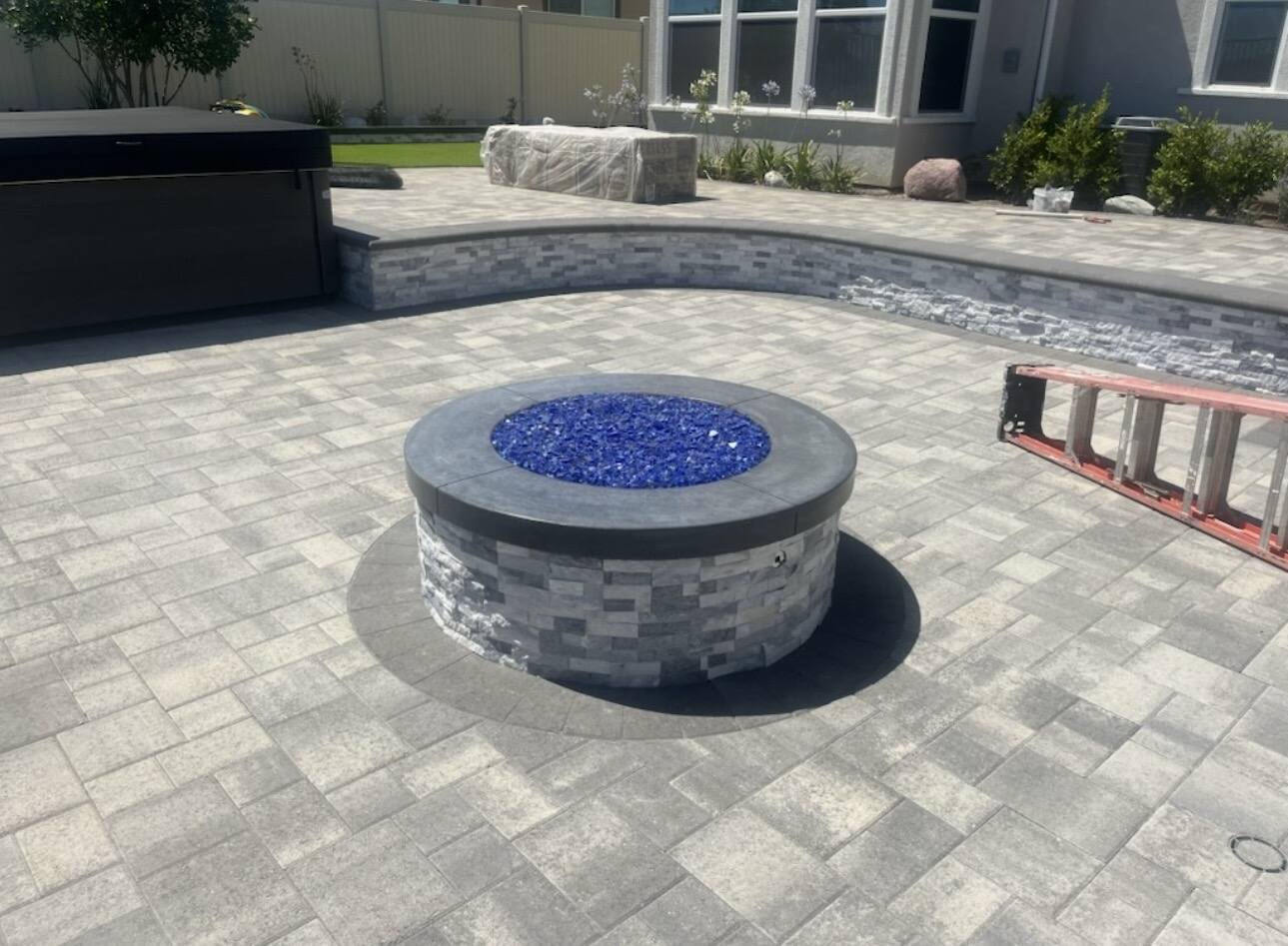
Fire pits
Built in and stone clad rather than a bowl from a hardware store, set into the patio so the seating works around it.
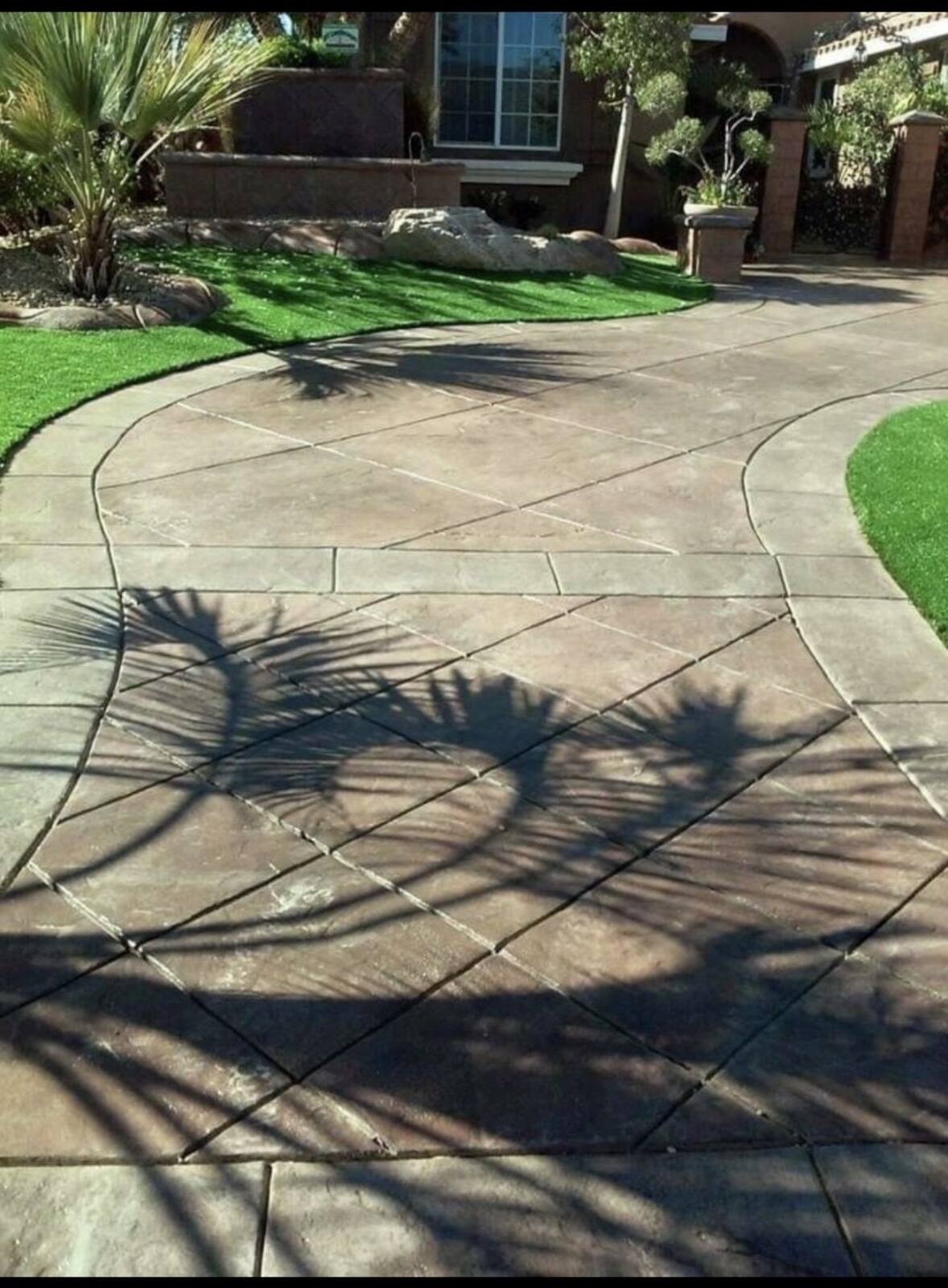
Walkways and paths
Concrete, stamped or paver, following the route people already take instead of the one that looks tidy on a plan.
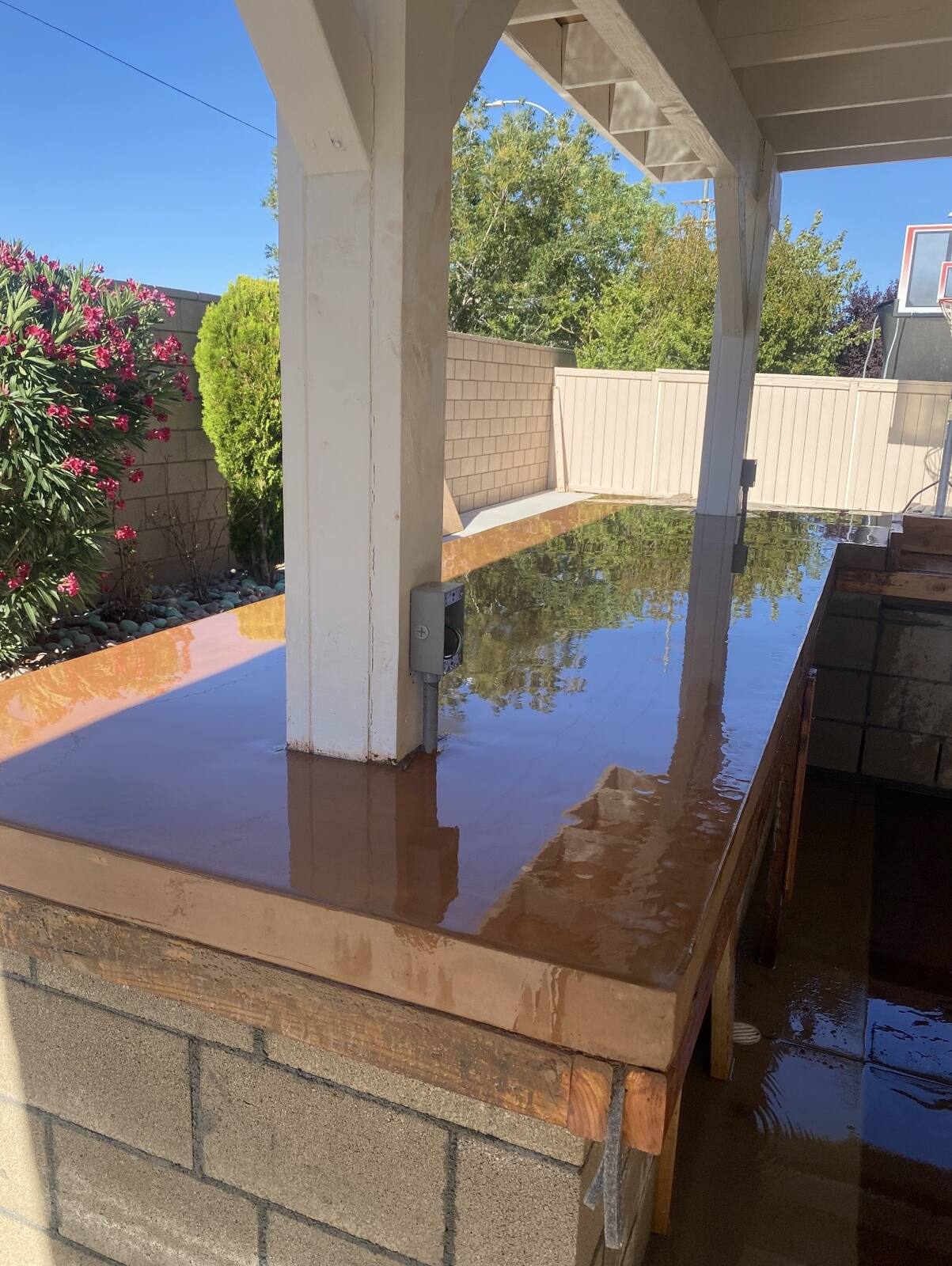
Outdoor counters and bars
Poured counters on block bases, finished and sealed for outdoor use.
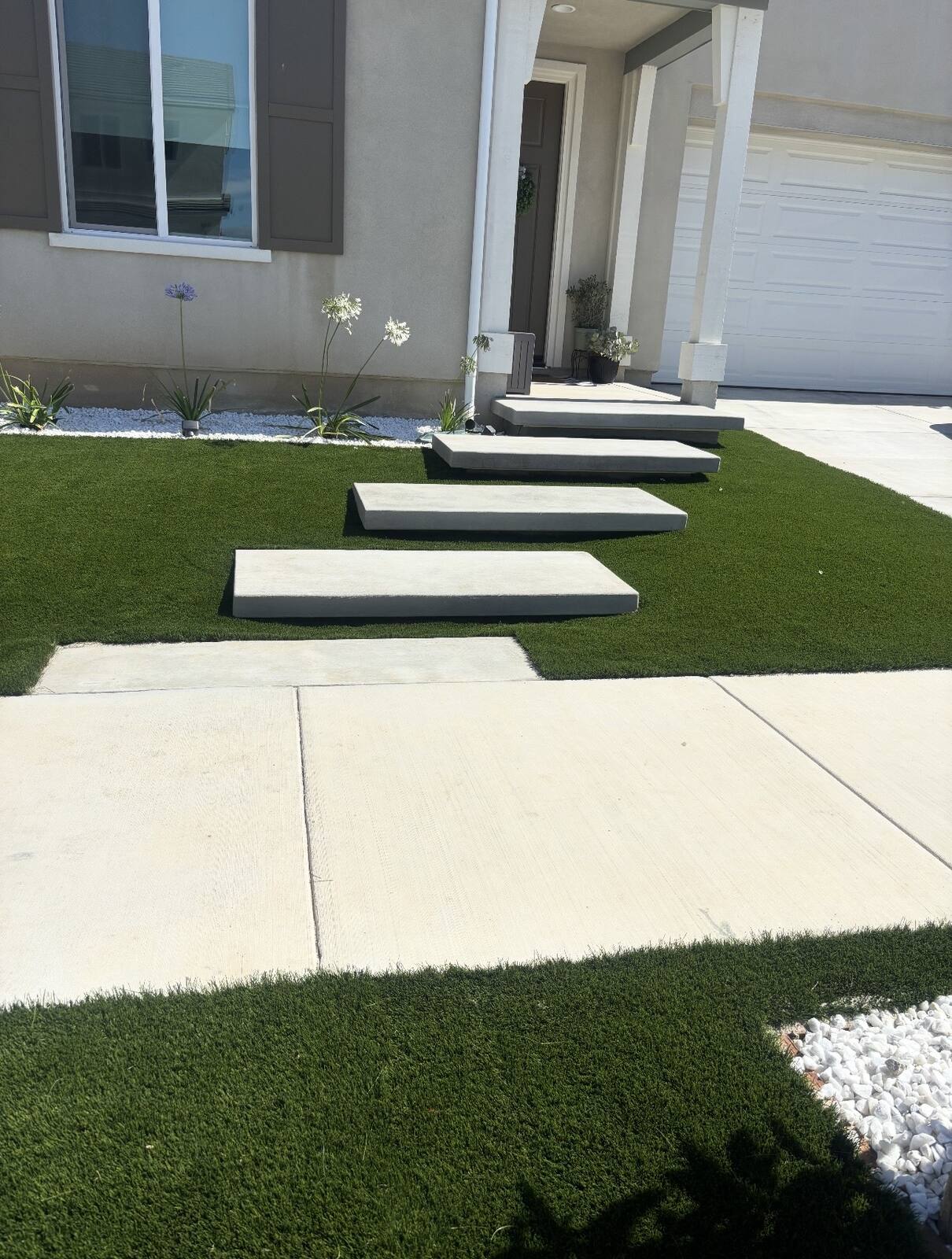
Steps and level changes
Floating pads, steps and grade transitions where a yard does not sit on one level, which on the hillside lots is most of them.
Recent work
Backyard work

How it goes
How a backyard job runs
Walk the yard
Where the sun is in the afternoon, where the wind comes from, where people already walk. That decides the layout more than a drawing does.
Decide concrete or pavers
Per area instead of for the whole yard. Plenty of jobs are a concrete patio with paver detail, or the reverse.
Base and layout
Excavate, compact, set edges and levels. Same discipline as a driveway even though nobody parks on it.
Build and finish
Pour or lay, build in the fire pit or counter, cut joints where they belong, and clean the site down.
Out here specifically
Building a yard you can actually sit in
Shade and wind are the two things that decide whether a patio gets used out here, and both get ignored at the design stage more often than they should. An unshaded slab on the west side of a house is unusable from about two in the afternoon through most of the summer. That is not a construction problem, it is a layout problem, and it is far cheaper to solve before the forms go in than after.
Wind is the other one. The Antelope Valley is its own National Weather Service forecast zone and wind advisories are a regular feature here, with local coverage citing gusts around fifty miles an hour. A raised seat wall, a solid edge on the windward side, or simply putting the seating area where the house blocks the prevailing wind makes the difference between a patio and an expensive piece of concrete nobody sits on.
On the technical side, everything about heat and joints on the driveway page applies to a patio slab too. What changes is that patios are more likely to sit where water collects, under a roofline, at the bottom of a slope, or inside the throw of a sprinkler. That matters because a slab that stays wet is the one situation where freezing nights genuinely bite. December and January average overnight lows below freezing at Fox Field. In a climate this dry that is usually irrelevant, but a patio that holds water and then freezes is the exception. Slope it properly and it stops being a question.
Questions we get
Concrete patio or pavers?
Concrete is better value on a large open area and there are no joints to maintain. Pavers are better where you want curves, level changes, or the ability to lift and reset a section later. Plenty of yards get both, with concrete for the main area and pavers for the detail.
How big should a patio be?
Bigger than most people first ask for. A table with chairs that pull out needs more room than it looks like on paper, and the regret worth avoiding is a patio sized to the budget rather than to the furniture. Walk it out with a tape before you decide.
Can you build a fire pit into the patio?
Yes, and building it in instead of dropping one on top is what makes the seating work. It gets set at the right height, clad to match the hardscape, and positioned so people can actually sit around it rather than beside it.
Do outdoor concrete counters hold up?
They do when they are sealed and maintained, which means resealing periodically the same as any outdoor concrete surface. Full sun and temperature swings out here are hard on any finish, so this is a surface that wants occasional attention instead of none.
Can you match a new patio to my existing slab?
In texture and finish, usually. In color, honestly, not exactly. Concrete cures to slightly different shades depending on the batch, the weather that week and the age of what is already there. We will get close and we will tell you where the line will show.
Do I need a permit for a backyard patio slab?
It depends on your jurisdiction and on what you are building. A ground level slab is treated differently from a structure. Lancaster and Palmdale run their own building departments, the unincorporated areas go through Los Angeles County, and Rosamond is Kern County. We will tell you what your specific job needs.
Where we do this
Patios and Hardscape across the Antelope Valley
Patio and hardscape work throughout the valley.
Get an estimate
Tell us what you are looking at and we will get back to you with a real number, not a range.
Submission received
Thanks for the details. Manuel will call or text you back about it. If you would rather not wait, reach him directly at (661) 917-9145.